
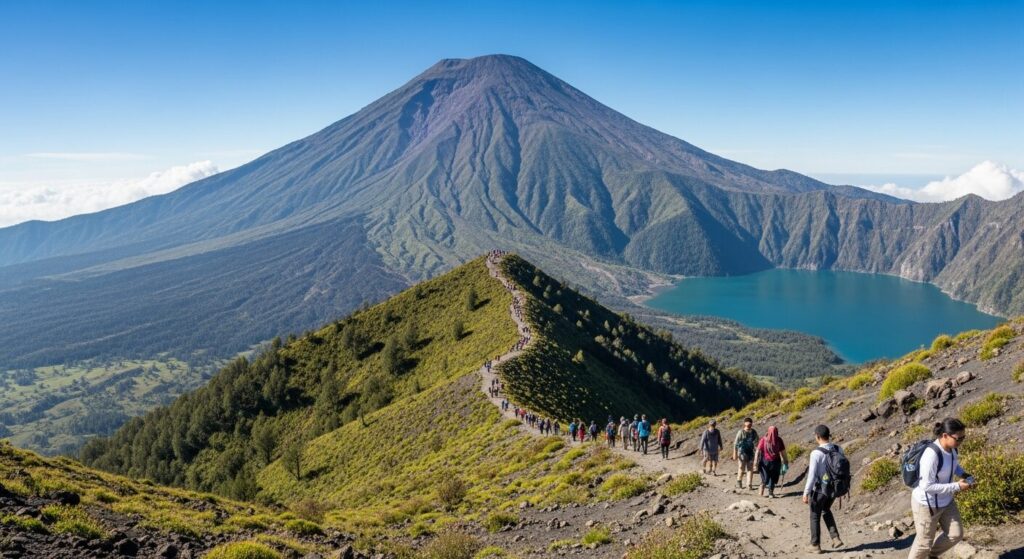
Mount Rinjani[4], with its towering peak and the charm of Lake Segara Anak, is a dream for many climbers in Indonesia. Even for beginners, conquering this mountain is not impossible. With the right preparation and adequate information, your journey to the roof of Lombok can be a safe, memorable, and, of course, rewarding experience.
1. Physical and Mental Preparation Before Climbing
Climbing Mount Rinjani is not just a casual stroll, but a journey that demands utmost preparation. Therefore, you must prepare physically and mentally well before the day of the climb. A strong physique will help you conquer the rugged terrain, while a resilient mentality is the key to persevering in the face of challenges. Both are crucial foundations for a safe climb.
1.1. Regular Physical Exercise
To build the necessary stamina, begin regular physical exercise[3] at least two to three months before your climb. You can focus on cardio exercises like jogging or cycling to improve your cardiovascular endurance. Don’t forget leg strength training, such as squats and lunges, which are crucial for supporting your body during steep uphill and downhill terrain.
1.2. Mental Readiness and Basic Knowledge
Besides physical preparation, you must also be mentally prepared for the long and tiring trek. You will encounter fatigue, drastic weather changes, and the potential for altitude sickness. Therefore, equip yourself with basic knowledge about navigation, the symptoms of Acute Mountain Sickness (AMS)[5], and time management. This mental preparation and insight will determine your success and safety during your Rinjani climb.
2. Essential Equipment for Beginner Climbers
Selecting the right equipment is key to your safety and comfort during your climb. As a beginner, you must bring a carrier bag with adequate capacity, clothing that adheres to a layering system[2], sleeping gear such as a tent and sleeping bag, and cooking utensils. Don’t forget supporting equipment such as a flashlight, first aid kit, and navigation tools to ensure a smooth journey.
2.1. Appropriate Clothing and Footwear
Choose clothing with a layering system to anticipate drastic temperature changes on Rinjani. Choose quick-drying materials like polyester and avoid cotton, as it dries slowly. For footwear, you must wear sturdy, broken-in hiking boots to avoid blisters. The right clothing and shoes are an investment in your comfort and safety.
2.2. Sleeping and Survival Gear
To rest comfortably in the cold of Rinjani, you need a sturdy tent to protect you from wind and rain. Additionally, bring a sleeping bag with an appropriate temperature rating, ideally below 10 degrees Celsius. Don’t forget a mattress as a sleeping mat so that your body doesn’t come into direct contact with the cold ground and you can get maximum rest.
3. Choosing the Right Hiking Trail and Tour Operator
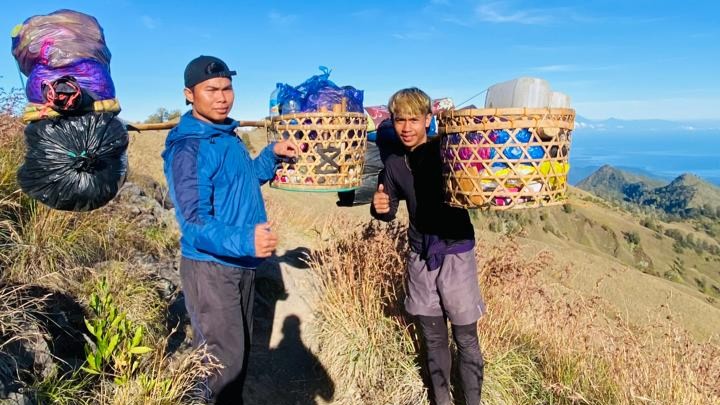
As a beginner, choosing the right hiking trail and tour operator[1] is crucial for your safety and comfort. Mount Rinjani has several official trails, with Sembalun and Senaru being the most popular. Using a tour operator is highly recommended, as they will take care of everything, from permits and guides to porters, so you can focus on enjoying your trip.
3.1. Popular Trails for Beginners (Sembalun or Senaru)
As a beginner, you’ll have two main trails to choose from: Sembalun and Senaru. The Sembalun trail offers expansive savannah views with gentle slopes at the start, but a very steep climb to the summit. In contrast, the Senaru trail is dominated by dense, shaded forest but offers a steep climb from the start. Many beginner climbers choose to ascend via Sembalun and descend via Senaru.
3.2. The Importance of Using a Guide/Porter
For beginners, using a guide and porter is the best investment for safety and comfort. They not only show you the safe route but also help you deal with emergencies. Porters will lighten your load by carrying heavy supplies, allowing you to focus more energy on enjoying the trip. With their help, you can minimize the risk of getting lost and becoming overly exhausted.
4. Food and Drink Logistics During the Climb
Managing food and beverage logistics is key to maintaining your stamina during a long trek. Make sure you bring high-calorie foods that are practical and don’t spoil easily. For drinks, prepare at least two to three liters of water per person per day to prevent dehydration. Careful planning will ensure your energy intake is always sufficient until you return to your starting point.
4.1. Menu Planning and Calorie Needs
Menu planning is crucial for maintaining your stamina on the trail. You’ll need more calories than usual, so prepare energy-dense foods. Prioritize meals containing balanced carbohydrates, protein, and fats. Don’t forget snacks like energy bars, dates, or nuts, which are convenient and can provide a quick boost of energy when you need it on the trail.
4.2. Water Sources and How to Conserve Them
Water sources on the Rinjani trail are generally only available at certain posts, so you must be smart about managing them. Make sure you always fill all your water bottles whenever you find a spring. Use water as needed and avoid wasting it. Carrying water purification tablets or a water filter is also highly recommended to ensure the water you drink is truly safe for consumption.
5. Safety Tips and Etiquette on Mount Rinjani
While on the mountain, your safety is your top priority. Always follow the guide’s directions and never walk alone or deviate from the designated trail. Ethical considerations include respecting nature and other climbers by avoiding excessive noise. Be mindful of your behavior and language, especially since you are in a place considered sacred by the local community.
5.1. Maintaining Health and Preventing Hypothermia
Staying dry is key to preventing hypothermia on Rinjani. Make sure you always wear appropriate clothing by layering and changing clothes immediately if they get wet. Consume high-calorie foods regularly to help your body generate heat. If you start shivering uncontrollably or feel disoriented, seek help immediately, as these are early signs of hypothermia.
5.2. Climbing Etiquette and Interaction with Nature
When in nature, you are a guest. Respect all living things by not disturbing wildlife or picking plants, including the protected Edelweiss flower. Stick to established trails to preserve the ecosystem. Maintain calm and respect other climbers. Your attitude reflects your love for nature and the beautiful environment around you.
6. Waste Management and Environmental Conservation
As a responsible climber, you have an absolute obligation to maintain the cleanliness and sustainability of Mount Rinjani. Bring back all the waste you produce, without exception, including organic waste. Prepare a special trash bag from the start and never leave it on the mountain. Your awareness is key to preserving Rinjani’s natural beauty for future generations.
6.1. Leave No Trace Principle
The Leave No Trace principle[6] is a basic ethic that you must uphold while climbing Rinjani. This means that anything you bring up must come back down, especially trash. Do not take anything, such as flowers or rocks, and leave no trace other than your footprints. In this way, you will help preserve the authenticity and beauty of Rinjani for future climbers.
7. Experience at the Summit and Segara Anak Lake
Upon reaching the summit of Rinjani, all your fatigue will be rewarded by the spectacular view of the sunrise with Mount Agung in Bali in the background. After the euphoria of the summit, the descent will take you to the enchanting Segara Anak Lake. Here, you can rest, fish, or soak in the natural hot springs, the perfect reward after an incredible effort.
Segara Anak Lake is an oasis in the middle of the Rinjani caldera, the perfect place to recharge. After descending the steep trail, you can camp on the lake’s edge while enjoying the iconic view of Mount Baru Jari. Don’t miss the opportunity to fish or soak in the nearby natural hot springs to soothe tired muscles after the long trek.